
Stockton City Directory Collections
The strongest physical run found for a Stockton city directory is the San Joaquin County Historical Museum's span of city and county directories from 1852 through 1980. The archive also holds county record series from 1850 to 1990, Great Registries of Voters, assessment and plat books, vital and marriage records, maps, municipal material, yearbooks, photographs, and social-club, manufacturing, and agricultural collections. The years overlap the printed-directory era and help bridge the Recorder web index's 1968 starting line.
| Collection | Years | Where held | Access and use |
|---|---|---|---|
| Stockton and San Joaquin city directories | 1852-1980 | San Joaquin County Historical Museum | Noncirculating research; verify the exact volume list |
| Stockton newspapers | 1850 onward, nearly complete local run | Cesar Chavez Central Library | Microfilm, copies, and partial subject index |
| Digitized directory index | Selected Husted, Polk-Husted, Polk, and Matthews years | Genealogy library index | Year and publisher discovery; inspect the volume |
| Stockton public documents | 1947 onward additions | Holt-Atherton, University of the Pacific | Online finding aids; collection rules apply |
| Industrial and pioneer archives | Nineteenth and twentieth centuries | Haggin Museum | Advance appointment and research fee |
| Federal census schedules | Stockton, 1850-1950 public | NARA and library databases | 72-year public-access rule |
A Stockton city directory year may be present in the digitized index without being a freely readable scan. Treat the index as a finding aid. Call or email the holding repository before making a long trip, and ask which publisher, year, and format is actually on the shelf.
Note: A year in a digitized index is a finding clue, not proof that a complete Stockton volume is online.
Stockton Directory Years and Publishers
The digitized year and publisher index lists Husted 1891 and 1902-03; Polk-Husted 1909-10, 1913, 1915, 1920, 1923, and 1924; R. L. Polk 1925, 1926, 1928, 1930, 1931, 1935, 1937, 1940, 1941, 1953-54, 1957-60, 1966-67, and 1976; and Matthews-Muldowney-Lucas 1931-32. It also points to a 1930 Stockton telephone directory, 1938-39 multi-county telephone books, and Stockton pages in 1893 and 1898 telephone books.
The 1930 R. L. Polk title page promises alphabetical businesses and private citizens, a Street and Avenue Guide, a directory of householders for Stockton and Lodi, rural routes, a numerical telephone guide, a Buyers' Guide, and classified businesses. The page also says a directory library was available for free use at Stockton Public Library and lists a $15 volume price. Those title-page details describe the planned contents, not proof that every section survives in every copy.
The digitized Stockton directory index is a practical way to check publisher and year before requesting a shelf copy.
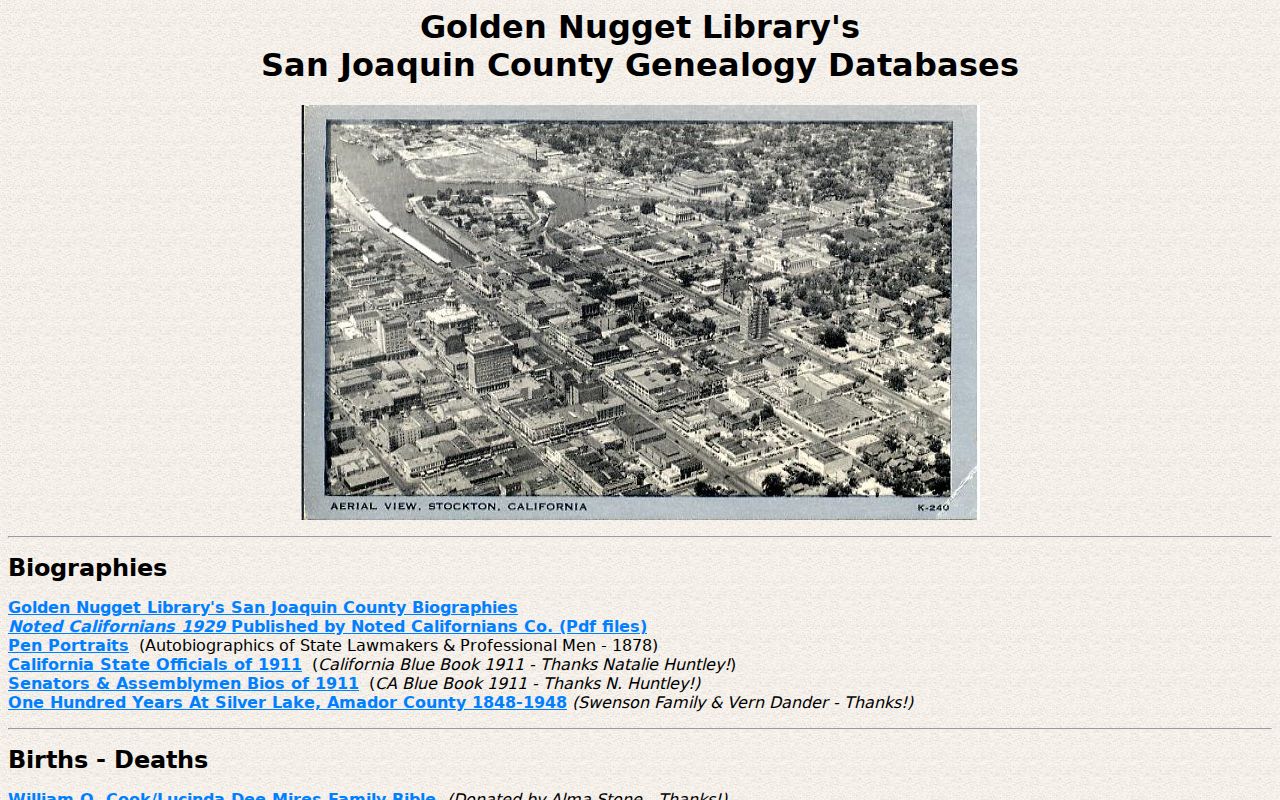
The index narrows the hunt, while the holding repository confirms the physical volume and its complete contents.
| Alphabetical section | Names or firms arranged by surname or business name. |
|---|---|
| Street guide | Street and number sequence for address-oriented searching. |
| Householder section | A publisher's address-based list; confirm which city it covers. |
| Telephone pages | Subscriber evidence, not a complete household list. |
| Classified pages | Business and service categories that add occupation context. |
Years that appear close together may use different publishers, abbreviations, boundaries, or city coverage. Record the title page, publisher, edition year, and front-matter key before comparing entries.
Find Stockton Volumes in Local History
The Cesar Chavez Central Library genealogy resources are the city-center starting point for a Stockton city directory search. Its second-floor Local History Collection is noncirculating and emphasizes Stockton and San Joaquin County. The library reports nearly the complete local newspaper record from 1850 on microfilm, a partial subject index, obituary-copy service, more than 1,500 genealogy reference books, and 175 genealogy magazines. Catalog searches by publisher and year help identify call numbers before a visit.
Microfilm can fill the gaps around a directory entry. A marriage notice may give a former surname. A social-page item may give a club or church connection. An obituary may add a later address or relative. Newspaper clues are leads, so compare them with the directory, vital record, deed, or probate custodian before treating a detail as settled.
The library's collection policy sends fragile manuscript and archive material toward the Historical Museum, Haggin Museum, and University of the Pacific. That division is helpful. The library is convenient for print and microfilm work, while the museums and Holt-Atherton supply deeper collections.
The library view reinforces that a Stockton city directory search is a research-room task as often as an online task.
Reading a Stockton City Directory Entry
A Stockton city directory entry is a compact set of clues. An alphabetical line normally gives surname, given name or initial, spouse in parentheses, occupation, employer or business, and residence address. A business line may list firm partners and a business address. Some publishers add a status mark or widow notation. Abbreviations change by year, so the key in the front matter should be read first.
| Name | Surname and given name or initial, with spouse or family notation when supplied. |
|---|---|
| Occupation | Work description and sometimes employer or firm. |
| Address | House number, street, or business location. |
| Status mark | Publisher-specific mark that may distinguish household or residence status. |
| Widow notation | A relationship clue that can point to a spouse or prior surname. |
- Criss-cross directory
- A reverse section arranged by street and house number rather than surname.
- Householder index
- An address-oriented list of household entries; confirm its Stockton or Lodi scope.
- Abbreviation key
- The publisher's explanation of short marks such as residence, business, or relationship notes.
- Subscriber
- A person or firm named for a telephone service, not necessarily every occupant.
No exact named Stockton line was transcribed in the research capture. That gap matters. Quote a person only after viewing the original volume and recording its page, publisher, and year.
Note: Read the publisher's abbreviation key before comparing a Stockton directory line with another edition.
Alphabetical and Criss-Cross Stockton Directories
An alphabetical Stockton city directory is best when the surname, spouse, occupation, or business is known. A criss-cross section is better when the street number is known. Read both when possible. The alphabetical side may identify a work clue, while the reverse side may show who was listed at a nearby number. Apartment numbers can be inconsistent, and telephone editions identify subscribers rather than every person in the building.
The 1920 browser labels its householder reverse section for Lodi. Do not attribute that particular reverse section to Stockton without inspecting its pages. The same caution applies to a combined city and county title. A book can carry Stockton in the title while a section covers a wider area or a different city.
Choose a benchmark year, record the exact street form, then test the matching alphabetic and address sections. Keep the scan or shelf reference with the note. That method prevents a familiar street name from being assigned to the wrong municipality or edition.
Stockton Newspapers Fill Directory Gaps
Stockton newspapers begin in 1850 at the library, creating a near-continuous local trail before the modern web. Newspaper notices can connect a directory name to a marriage, death, club, school, church, business, or move. They can also clarify a changed surname or a former address. The partial subject index is useful but does not cover every year, so date-based browsing and microfilm work remain important.
A newspaper item should be treated as a bridge. Confirm a death with the Recorder or CDPH when an official event record is needed. Confirm an address against the directory or deed. Confirm an heir through probate or a court file. A funeral-home notice can provide a lead, but the holding custodian supplies the stronger record.
The pattern makes Stockton's city directory collections unusually useful. Newspapers start in 1850, the broad directory run begins in 1852, and local deeds and maps reach 1851. Together they can cover a period that a single census year cannot.
Note: Newspaper clues can connect names and places, but the official custodian remains the source for a certified event record.
Little Manila in Stockton's Historical Trail
The County Historical Museum's Manila Club and Hotel corporate records preserve a residential and community layer that parcel rolls cannot supply. A residential hotel can connect people through organization records, address, newspapers, and directories even when no person owns the underlying land. That makes the collection valuable for family history and community history in Little Manila.
Chinese-language business records from 1879 to 1933 can also resolve names that English indexes rendered inconsistently. Compare original script, business name, address, newspaper setting, and directory spelling. Do not assume that one transliteration is the only possible match.
The Historical Museum archive description identifies the directories, Great Registries, assessment books, maps, photographs, and community collections behind that broader trail.
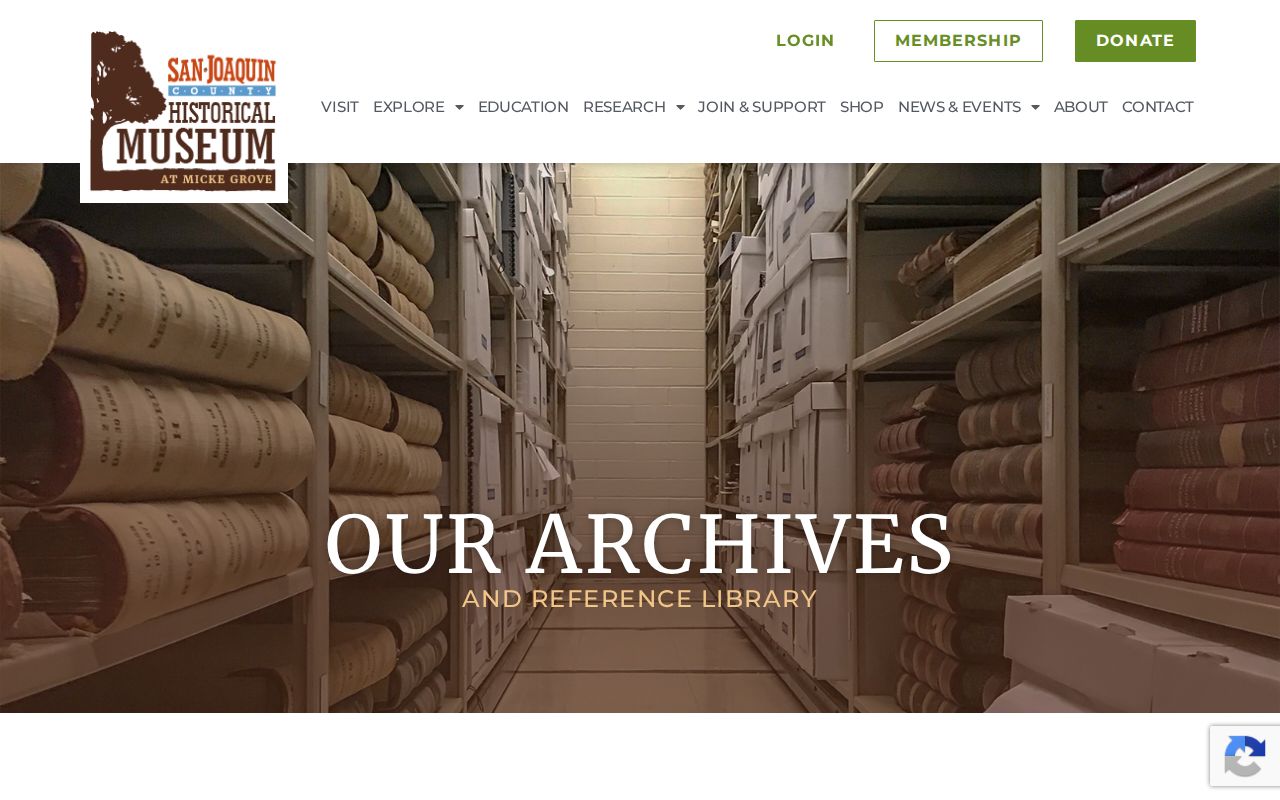
The museum archive gives a Stockton city directory search more than names. It supplies the local organizations, industries, and neighborhoods that explain why an entry changed.
Stockton Industrial Archives as Name Clues
Occupation clues can separate two people with the same surname and initial. The Haggin Museum archive includes material on Holt Manufacturing, Stockton Iron Works, Sperry Flour, Tillie Lewis Foods and Flotil Cannery, Stephens Bros., and the San Joaquin Society of California Pioneers. Research use is by advance appointment as staff permits. The listed base research fee is $15 plus reproduction and copy fees; Stephens Bros. Boatbuilders requests $25, while members' research fees are waived.
Holt-Atherton Special Collections at the University of the Pacific holds Stockton public documents from 1947 onward, photographs, manuscript collections, organizational files, and institutional history. Its Online Archive of California finding aids can be searched remotely, but collection rules and appointment needs still apply.
The Stockton public-documents finding aid shows how a directory occupation can lead to an archive rather than another name index.
Read an occupation as an identity control, not as a claim about a private life. A company roster or manuscript collection still needs its own access and privacy review.
Use Stockton City Directories for Family History
Tracing a household through Stockton city directories works best one edition at a time. Start with a year close to a known event, record the exact name, spouse, occupation, address, and any publisher marks, then move forward and backward. Pair the 1940 or 1950 directory evidence with the matching federal census. Use deeds and assessment books to separate parcel history from household history. Use newspapers, vital records, obituary notices, and probate to close a trail.
- Choose a benchmark year and identify the correct publisher and city scope.
- Capture the alphabetic entry and its address, occupation, spouse, and status marks.
- Check the criss-cross or street section for the house number and nearby entries.
- Compare the next directory year and the nearest public census schedule.
- Test a move, death, or surname change with newspapers, deeds, vital records, or probate.
Disappearance from a volume can mean nonpublication, omission, relocation, annexation, a spelling change, or death. It does not identify which explanation is correct. A Stockton city directory becomes reliable when every transition is dated and paired with a second source.
Note: A directory entry is a dated observation, so preserve the edition, page, publisher, and access location with every family-history note.