
Stockton Sources for Previous Residents
A Stockton house history begins with today's address, but the useful source changes as the years move backward. The Recorder web index covers 1968 forward. Office books and maps reach 1851. The Historical Museum's city and county directories span 1852 to 1980. Stockton census schedules are public from 1850 through 1950. Permits and Sanborn maps help date changes to the structure. Newspapers, vital records, obituary notices, and probate add family context.
| Source | Years it covers | Where held | What it shows |
|---|---|---|---|
| Recorder web name index | 1968-present | San Joaquin County Recorder | Parties, document type, date, and instrument reference |
| Recorded books and maps | 1851-present | Recorder counter | Deed chain, legal description, and map records |
| City and county directories | 1852-1980 | Historical Museum | Occupant, address, and occupation by edition |
| Assessment and plat books | 1850-1990 archive series | Historical Museum | Owner, assessment, and parcel geography |
| Federal census | Stockton schedules 1850-1950 public | NARA and library databases | Household members, ages, occupations, and place |
| Permits and Sanborn maps | Dataset or catalog coverage varies | City, Museum, and LOC | Project dates, footprint, use, materials, and former number clues |
| Obituary, vital, and probate records | Event-specific | Library, Recorder, CDPH, Court | Death, relationship, heirs, and closing evidence |
The table prevents a common error. A deed transfer names a title event. A directory entry names a person associated with an address for that edition. A census lists a household for its schedule. Previous residents can be reconstructed only by comparing the sources and their dates.
Note: A previous residents trail should label ownership, occupancy, and event evidence as separate kinds of proof.
Start a Stockton House History with the APN
Search the San Joaquin Assessor by Street Address first. Save the APN, assessment or valuation year, displayed assessee, mailing fields, and full legal description. The legal description may use a subdivision lot and block or metes-and-bounds language. It is the bridge into older deeds when a street number has changed.
The mailing address deserves its own note. It can be an accountant, trustee, PO box, company, or old destination. It may help locate a person, but it does not prove that the owner occupied the Stockton address. The APN and legal description are stronger keys for a prior-owner trail.
The San Joaquin assessment inquiry supplies the address-first starting point. A public owner-name search is not advertised, so a name-first question may need the Recorder index or a counter route.
The Recorder self-service portal guide shows the handoff from an address clue to a recorded-document search.
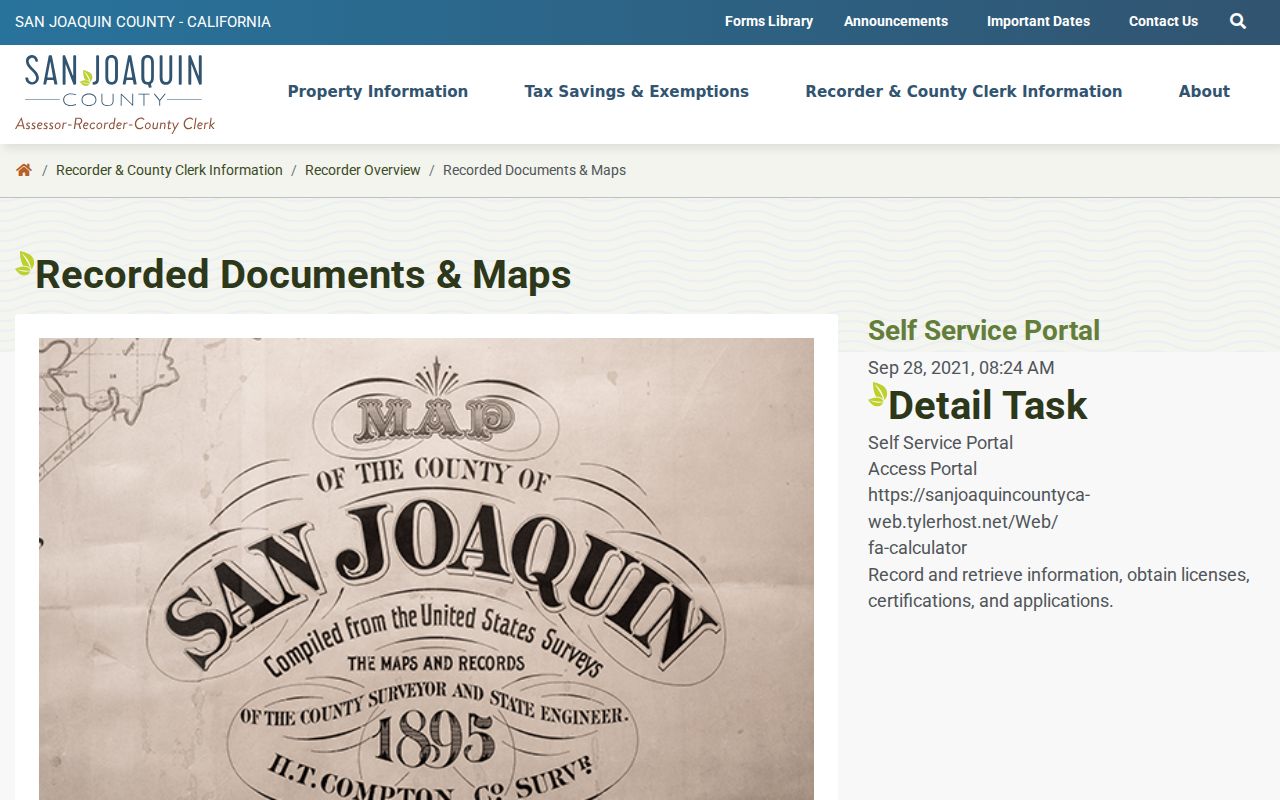
The guide reinforces that the web index is a starting point for a document trail, not a substitute for the underlying instrument.
- APN
- The Assessor parcel identifier used to connect an address, map, and assessment.
- Legal description
- The title description that remains useful when a street label changes.
- Situs
- The physical parcel location, distinct from a tax mailing destination.
- House history
- A dated reconstruction of land, structure, owners, occupants, and events.
Walk Back the Stockton Deed Chain
The deed chain is the core path for previous residents when the address has a known current parcel. A grantor transfers an interest. A grantee receives it. The chain of title is the sequence of recorded transfers tied by names, dates, and legal description. The Recorder's index is a finding aid, so open or order the underlying document before treating an index row as proof.
- Search the Assessor by address and save the APN, current assessee, mailing field, and legal description.
- Search the Recorder's 1968-present index for the current owner as a likely grantee during the acquisition period.
- Capture the deed's grantor, grantee, date, instrument number, legal description, and return address.
- Search the seller as an earlier grantee and compare the legal description before moving backward again.
- At the 1968 boundary, move to the Recorder's digital or film books and use book, page, and instrument references.
- Pair ownership events with directories, census schedules, permits, maps, newspapers, and probate for the household story.
A grant deed, deed of trust, lien, release, and reconveyance do not mean the same thing. Read the document type and parties before calling a name a previous resident. The APN can remain stable while people and recorded roles change.
- Grantor
- The party shown as transferring an interest in a recorded instrument.
- Grantee
- The party shown as receiving an interest in that instrument.
- Chain of title
- The linked sequence of recorded transfers for one parcel.
- Legal description
- The title wording that identifies land more durably than a postal label.
The San Joaquin Recorder Self Service Portal is the web entry to the grantor-grantee index.
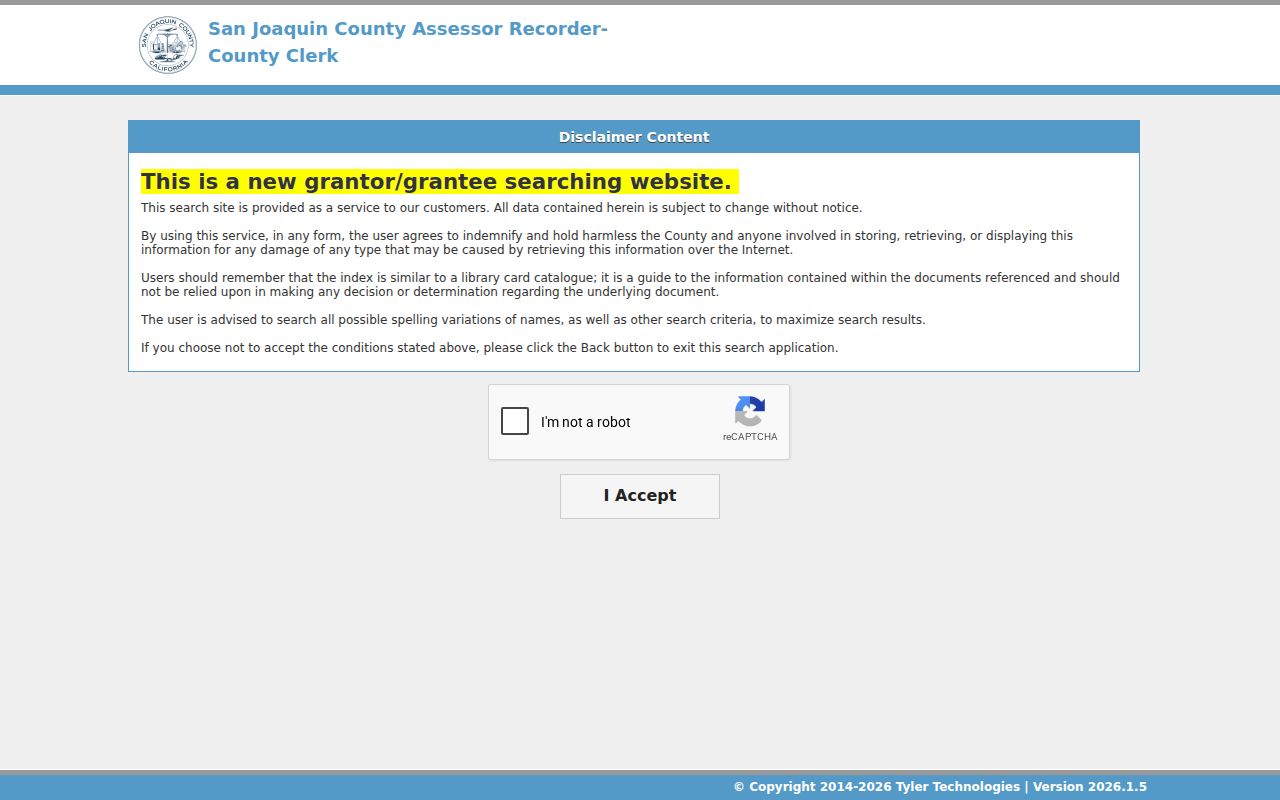
The portal view illustrates the name-and-instrument side of a Stockton previous residents search. It does not replace the recorded deed or the older counter books.
Note: The legal description is the check that keeps a same-name deed from entering the wrong Stockton chain.
Stockton's 1968 Deed Index Line
The modern Recorder web index begins January 1, 1968, while holdings and maps reach 1851. That split is an important numbers clue. A missing web hit before 1968 is not evidence that a deed never existed. It means the search has reached the office's older book, map, digital, or film path.
The Recorder describes its index as a library card catalog. Search spelling variants, both party roles, and the local document-number form. Numbers from 2000 forward begin with a four-digit year; older numbers use a two-digit year. Remove external “SQ” prefixes before searching. The office lists $1 per page for self-assisted copies, $3 per page for staff-assisted copies, and $2 per document for certification.
The Recorder's search guidance is useful for same-name and lien checks.
When two names look alike, compare the parcel, instrument type, release reference, and legal description. That control keeps an old deed from being attached to the wrong Stockton household.
Directories and Census for Past Stockton Residents
Ownership is only half of a previous residents trail. The Historical Museum's 1852-1980 city and county directory collection can show names, addresses, occupations, spouses, and publisher marks. Reverse or criss-cross pages put the evidence in street order. The federal census supplies public Stockton schedules from 1850 to 1950, with household members, ages, occupations, and place information. Pair a directory year with the nearest census rather than using either as a complete roll.
Choose a benchmark year. Capture the address exactly. Move one edition at a time. Record “rem,” “r,” “h,” “wid,” and other marks only after checking the publisher's key. Use the directory collection page for volume and publisher details, while this previous residents workflow uses those volumes to test an address.
A missing person can reflect nonpublication, omission, relocation, a changed number, annexation, a spelling variation, or a private household. A directory can identify a subscriber or listed household, not every person who stayed at the address.
The Historical Museum also holds Great Registries of Voters and assessment and plat books. These historical rolls can help connect a block and a date, but their exact volume years need an archive inventory.
Address-history flow: current APN → acquisition deed → prior grantor → directory year → nearest public census → newspaper, vital, or probate check.
Note: A directory and census pairing is strongest when the address, year, publisher, and schedule location are all preserved.
Sanborn Maps and Stockton Address Changes
Sanborn fire-insurance maps can show a building footprint, use, construction material, and street-number context for selected years. The Historical Museum and Library of Congress collections hold Stockton sheets, but the research does not publish a complete local year list. Verify the sheet, year, and address before drawing a date from a map.
There is no authoritative citywide Stockton street-renumbering conversion table in the research. Use directory front matter, historic maps, permits, subdivision maps, and legal descriptions to bridge a changed number. A parcel description is safer than guessing that two similar street labels refer to one house.
Permit rows add dated construction or alteration events. The record ID lets Community Development locate an underlying file when a public export lacks a needed detail. Permit contacts can be applicants or contractors, so keep project evidence separate from occupant evidence.
| Sanborn map | Footprint, use, materials, and historic address context. |
|---|---|
| Subdivision map | Lot, block, street, and parcel relationship. |
| Permit row | Project date, type, status, and public contact fields. |
| Legal description | Durable title key when street names or numbers shift. |
This combination helps explain a gap without inventing a street-history fact that the sources do not state.
Obituaries, Probate, and Stockton Vital Records
Newspaper obituaries and social notices can connect a past address to a spouse, relative, club, church, school, or former place. Cesar Chavez Central Library holds nearly the complete Stockton newspaper record from 1850 on microfilm and accepts obituary or vital-notice copy requests. Treat a funeral-home notice as a lead and verify the event with a death record, probate file, or court record.
San Joaquin County Recorder holds county birth and death records for all county event years and public marriages. The County Clerk holds confidential marriages. CDPH maintains statewide vital records. A divorce decree comes from Superior Court, not the CDPH dissolution certificate. Access depends on record type and whether an informational or authorized copy is requested.
The county vital-records office is the local ordering path for an event tied to a Stockton address.
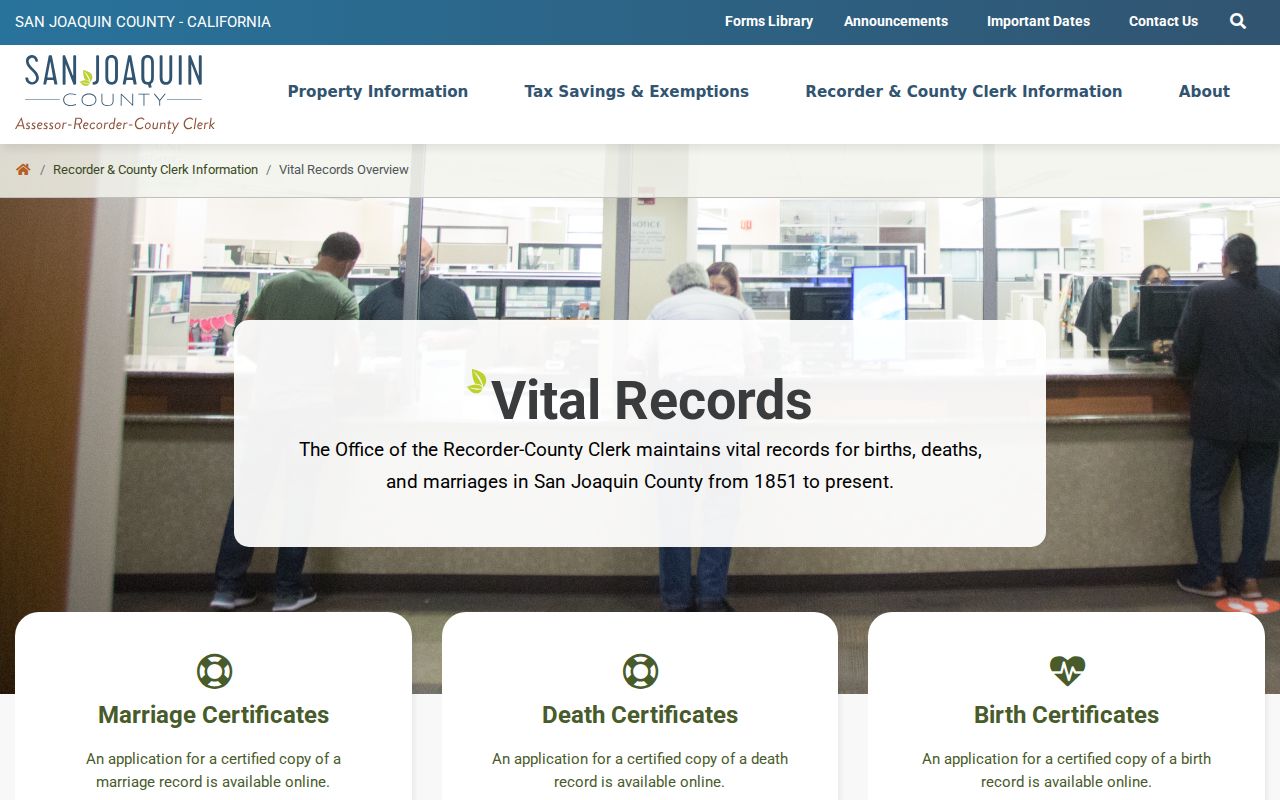
Vital records can close a family trail, but an eligibility rule may limit the copy even when the event itself is historically relevant.
2026 Vital Fees in a Stockton House History
Current fees matter when a previous residents search reaches an official copy. CDPH's 2026 schedule lists $31 for a birth certified copy, $26 for death, $19 for marriage, and $18 for a dissolution certificate. San Joaquin County's separate schedule lists $34 for birth, $26 for death, $19 for marriage, and $23 for fetal death. A fee is retained as a search fee when no record is found.
Use the live custodian schedule before mailing a request. CDPH mail requests use check or money order payable to CDPH Vital Records, not cash. As of July 2026, CDPH reported average certified-copy processing of four to six weeks and amendments of seven to nine weeks, with no public counter or expedited service. Processing changes, so date the note.
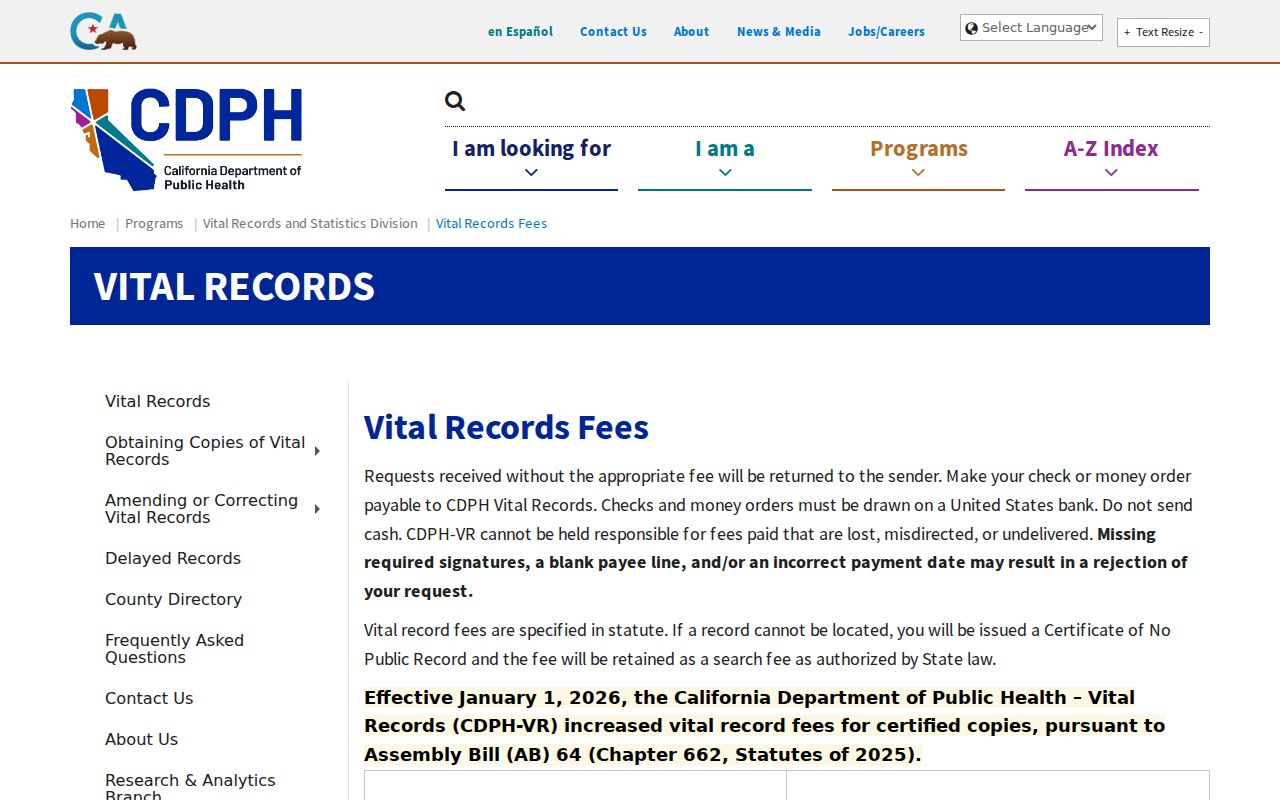
The California vital-record fee page shows the state side of a Stockton previous residents request.
Fee and timing facts should be refreshed before an order. They are practical details, not evidence that a record exists.
Lawful House History and Stockton Privacy
Previous residents research is appropriate for family history, an old building, an estate, a neighborhood story, or a documented property question. It should not become a way to follow a living person. Safe at Home can protect qualifying participants through a substitute address. Confidential voter records remain withheld. DMV data is governed by the federal Driver's Privacy Protection Act. Court, adoption, juvenile, and sealed records have their own restrictions.
The California Public Records Act, Government Code sections 7920.000 through 7931.000, supports requests for identifiable records from the correct custodian. It does not require a new resident list. A record correction belongs with the Assessor, Recorder, Court, election office, or other office that created or maintains the record.
Lawful use. Use previous residents records for house history, family history, and safe personal research. Do not use an address trail to stalk, harass, intimidate, or harm any person.
A finished Stockton previous residents note should separate owner, occupant, subscriber, permit contact, and relative. It should also identify the date, source, and gap. That structure is more honest and more useful than a single undated list of names.